This site will look much better in a browser that supports web standards, but it is accessible to any browser or Internet device.


blog0news


  • O BRASIL EH O QUE ME ENVENENA MAS EH O QUE ME CURA (LUIZ ANTONIO SIMAS)

  • Vislumbres

    Assinar
    Comentários [Atom]

    Powered by Blogger

    Fragmentos de textos e imagens catadas nesta tela, capturadas desta web, varridas de jornais, revistas, livros, sons, filtradas pelos olhos e ouvidos e escorrendo pelos dedos para serem derramadas sobre as teclas... e viverem eterna e instanta neamente num logradouro digital. Desagua douro de pensa mentos.


    domingo, fevereiro 22, 2026

    What if the Great American Novelist Doesn’t Write Novels?


    Frederick Wiseman’s documentary films offer an unparalleled, panoramic vision of society. His 45th feature, “City Hall,” is on PBS this month — and he’s eager to get back to work. 


    "The fact that Wiseman’s half-century-long project is a series of cinéma-vérité documentaries about American institutions, their titles often reading like generic brand labels — “High School,” “Hospital,” “The Store,” “Public Housing,” “State Legislature” — makes its achievement all the more remarkable but also easier to overlook. Beginning with “Titicut Follies” (1967), a portrait of a Massachusetts asylum for the criminally insane that remains shocking to this day, Wiseman has directed nearly a picture a year, spending weeks, sometimes months, embedded in a strictly demarcated space — a welfare office in Lower Manhattan, a sleepy fishing village in Maine, the Yerkes Primate Research Center at Emory University, the flagship Neiman Marcus department store in Dallas, the New York Public Library, a shelter for victims of domestic violence in Tampa, Fla., a Miami zoo — then editing the upward of a hundred hours of footage he brings home into an idiosyncratic record of what he witnessed. Taken as a whole, the films present an unrivaled survey of how systems operate in our country, with care paid to every line of the organizational chart.

    They also represent the work of an artist of extraordinary vision. The films are long, strange and uncompromising. They can be darkly comic, uncomfortably voyeuristic, as surreal as any David Lynch dream sequence. There are no voice-overs, explanatory intertitles or interviews with talking heads, and depending on the sequence and our own sensibility, we may picture the ever-silent Wiseman as a deeply empathetic listener or an icy Martian anthropologist."

    read essay by MARK BINELLI 


    Image
    “Titicut Follies,” 1967.Credit...Zipporah Films


    Rebeldys


    Marcadores: ,

    Empresários se preparam para frear fim da jornada 6x1


     Homem no centro da imagem segura cartaz com texto "Fim da escala 6x1, reduza a carga horária já!" em meio a grupo de manifestantes. Pessoas ao redor seguram bandeiras e celulares, algumas usam camisetas pretas com mensagens relacionadas ao trabalho.

    "Associações, empresários e frentes parlamentares definiram um plano para tentar frear o fim da jornada de trabalho 6x1 —seis dias de trabalho e um de descanso— com três tipos de abordagem. Eles planejam atuar para que a votação fique para depois da eleição, preparar estudos e campanhas para mostrar os pontos negativos da mudança e apresentar propostas alternativas, como a desoneração da folha de salários ou autorizar o pagamento por hora trabalhada."

    leia reportagem de
    Raphael Di Cunto
    Fernanda Brigatti


    Empresários se preparam para frear fim da jornada 6x1

    When Cruelty Seems Like a Joke


     "The Trump administration and its Department of Homeland Security have made frame perversion a signature feature of their social media presence. On Valentine’s Day 2025, the White House posted images of Trump and his border czar, Tom Homan, set against a pink backdrop and paired with a sing-song rhyme: “Roses are red / Violets are blue / Come here illegally / And we’ll deport you.” As Christmas approached later that year, the official ICEgov Instagram account shared an AI-generated image of an “ICE AIR” flight full of deportees pulled through the sky by Santa’s reindeer, captioned: “Avoid ICE AIR and go Ho Ho Home…” In each case, cheerful, familiar holiday imagery provides the setup; state violence supplies the punchline.

    The frame perversion pattern reached its most chilling form in another White House post labeled “ASMR: Illegal Alien Deportation Flight.” ASMR—short for “Autonomous Sensory Meridian Response”—usually refers to videos designed to produce calm or pleasure through soft, repetitive sounds. Here, that “soothing” frame was supplied by the hum of jet engines, the metallic rattle of chains pulled from a crate, the click of handcuffs, the quiet clink of leg shackles with each step up the gangway. These sounds are meant to relax the viewer, even as they mark the forcible end of someone’s life as they know it. Frame perversion, in this case, does not merely normalize cruelty. It invites the audience to relax pleasurably within it."

    read analysis by 

     When Cruelty Seems Like a Joke - CounterPunch.org


    The Nazi Origins of the South American Drug Trade: Klaus Barbie, Cocaine and the CIA


    "By the time Klaus Barbie went on the payroll of an American intelligence organization in 1947, he had lived several lifetimes of human vileness. Barbie sought out opponents of the Nazis in Holland, chasing them down with dogs. He had worked for the Nazi mobile death squads on the Eastern Front, massacring Slavs and Jews. He’d put in two years heading the Gestapo in Lyons, France, torturing to death Jews and French Resistance fighters (among them the head of the Resistance, Jean Moulin). After the liberation of France, Barbie participated in the final Nazi killing frenzy before the Allies moved into Germany.

    Yet the career of this heinous war criminal scarcely skipped a beat before he found himself securing entry on the US payroll in postwar Germany. The Barbie was shipped out of Europe by his new paymasters along the “ratline’ to Bolivia. There, he began a new life remarkably similar to his old one: working for the secret police, doing the bidding of drug lords and engaging in arms trafficking across South America. Soon, his old skills as a torturer became in high demand."

    read more by Jeffrey St. Clair  

    The Nazi Origins of the South American Drug Trade: Klaus Barbie, Cocaine and the CIA - CounterPunch.org

    Preces de Carnaval


    PALAVRAS


    Meu pai me disse algo quando eu era muito pequeno para me prover de confiança. "Ninguém no mundo vale mais do que você, mas também ninguém vale menos". É uma visão egualitária que tenho carregado pela vida. É por isso que sou a favor do ensino gratuito., de universidades gratuitas, de saúde gratuito e de creches gratuitas. Porque a nossa sociedade pode bancar isso. Nos Estados Unidos, as pessoas acham que democracia social é algum tipo de comunismo. Pensam que capitalismo é liberdade. Não é. É apenas a liberdade de explorar as pessoas. "  

    Stellan Skarsgård, ATOR 


    Willie Colón & Rubén Blades - Plástico

     Era una ciudad de plástico

    De esas que no quiero ver
    De edificios cancerosos y un corazón de oropel
    Donde en vez de un Sol amanece un dólar

    Donde nadie ríe, donde nadie llora
    Con gente de rostros de poliéster
    Que escuchan sin oír y miran sin ver
    Gente que vendió por comodidad
    Su razón de ser y su libertad

    IN MEMORIA WILLIE COLON 


    sábado, fevereiro 21, 2026

    Marika Hackman - Playground Love (AIR)

     I'm a high school lover

    And you're my favorite flavour
    Love is all, all my soul
    You're my playground love


    sexta-feira, fevereiro 20, 2026

    Dilbert Creator’s AI Resurrection Not So Comic for His Family


     "Dubbed “AI Scott Adams,” the synthetic creation, which first popped up on X and YouTube, looks and sounds nearly identical to the actual Adams. Its appearance has sparked a clash between the Silicon Valley wing of MAGA, which finds it all pretty remarkable, and many of Adams’s fans and family, who are horrified."

     read more> 

    Dilbert Creator’s AI Resurrection Not So Comic for His Family

    Tim Hardin - How Can We Hang On To A Dream


    What can I say, she's walking awayFrom what we've seenWhat can I do, still loving youIt's all a dream
    How can we hang on to a dream?How can it really be the way it seems?


    AGU defende Marinha e afirma que Revolta da Chibata foi 'insubordinação grave' e 'ameaça à ordem pública'

    Bernardo Mello Franco

    União afirma que Força Naval não é obrigada a homenagear João Cândido, o Almirante Negro, que lidrou rebelião contra castigos físicos em 1910


    Em ofício à Justiça Federal, a AGU classificou a rebelião histórica como um "episódio marcado por mortes, insubordinação grave e ameaça à ordem pública e ao Estado de Direito".

    O documento afirma que a Força Naval buscou "preservar os princípios da hierarquia e disciplina" e "não está juridicamente obrigada a endossar honrarias simbólicas as quais (sic) não concorda".

    A AGU se manifestou no último dia 3, em resposta a ação do Ministério Público Federal para que a União seja condenada a pagar R$ 5 milhões por dano moral coletivo.

    O ofício da AGU é assinado por Cláudio de Castro Panoeiro, advogado da União que comandou a Secretaria Nacional de Justiça no governo de Jair Bolsonaro.

    Em 2024, o comandante da Marinha, almirante Marcos Olsen, disse à Comissão de Cultura da Câmara que a Revolta da Chibata foi um "fato opróbio" (vergonhoso) em que "abjetos marinheiros" desrespeitaram a hierarquia e a disciplina.

    Foi a segunda vez em que a Força tentou convencer os deputados a barrar o projeto de lei que inclui João Cândido, conhecido como Almirante Negro, no Livro dos Heróis e Heroínas da Pátria.

    No ofício da semana passada, a AGU também contestou o pedido para que a Marinha seja impedida de fazer novas manifestações ofensivas à memória de João Cândido.

    Segundo Panoeiro, a ordem representaria "censura institiucional" e violação ao princípio da separação de Poderes.

    A Revolta da Chibata foi um movimento de marinheiros, em sua maioria negros, pela abolição das punições físicas nos navios.

    A revolta começou quando o marujo Marcelino Rodrigues Menezes foi castigado diante da tripulação do encouraçado Minas Gerais. Ele foi amarrado ao mastro e levou 250 chibatadas.

    O GLOBO

    Mulher assassinada por ser mulher é um dos tantos assuntos esquecidos no debate podre

     VINICIUS TORRES FREIRE

    No começo de fevereiro, reinício oficial do ano oficialesco, líderes dos três Poderes assinaram o "Pacto Nacional Brasil contra o Feminicídio". Basicamente, criaram uma comissão, que pode dar em nada ou em alguma coisinha, a depender da política. É o "Comitê Interinstitucional de Gestão", de acompanhamento de dados e ações, com representantes dos Poderes, do Ministério Público e das Defensorias Públicas.

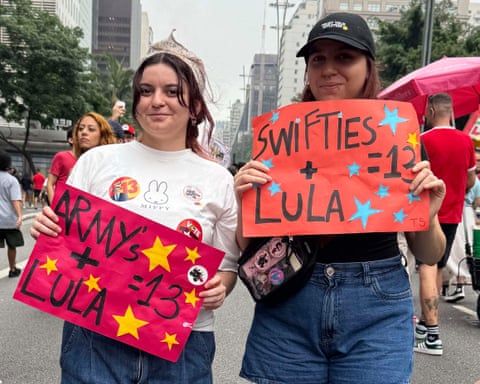
    O que tem isso a ver com as conversas do momento, de bandalheira, besteira e acordão nos Poderes ou de governo e oposição envolvidos nessa história de escola de samba do Lula? Nada. É o problema: mais do que de costume, estamos bestificados a assistir um palco tomado por podres e bobagem. Convém lembrar do que não estamos cuidando por causa disso. Por exemplo, feminicídio.

    No reinício do ano político-jurídico, ainda estava na memória mais comum a história de horror de Tainara Souza Santos, torturada ao ser arrastada pelo carro de um homem. Morreu aos 31 anos, na véspera do Natal do ano passado. Desde então, teriam morrido outras 228 mulheres, dado o número médio de quatro feminicídios por dia. Deve ter sido bem pior.

    A taxa média de solução de homicídios no Brasil tem ficado entre 30% e 40% nos últimos nove anos, segundo dados compilados pelo Instituto Sou da Paz. Até o fim de 2024, apenas 36% dos homicídios dolosos que ocorreram em 2023 tinham sido esclarecidos —o instituto avisa que não há informações para todos os estados, mas em geral para algo em torno de 17 deles, por precariedade até do mero registro dos homicídios.

    Quantos mais feminicídios há enterrados nessa violência obscura toda? Quanta subnotificação de feminicídio há mesmo entre as mortes registradas e investigadas?

    Por falar em homicídio: em 2024, dado mais recente, houve no Brasil 44.127 "Mortes Violentas Intencionais", segundo o Anuário Brasileiro de Segurança Pública. Cerca de 37 mil pessoas morreram no trânsito. Não importa a conversa fiada do calor e do amor no país do Carnaval (que nem é mais muito disso): um lugar que convive sem revolta maior com esse morticínio é monstruoso e morto. "Ah, vão votar (talvez) uma PEC da Segurança". Planos reais, com coordenação nacional, apoio político, projetos e supervisão de gente especializada, com verificação de resultados, não existem. Não sabemos nem mesmo quem foi morto, por qual motivo.

    O que isso tem a ver com o tumulto vexaminoso na cúpula dos Poderes e agregados? Com a República afundando ainda mais, como na lama do Master? Há até esforços meritórios e que devem aparecer no palco do ano, como a tentativa de Flávio Dino de conter a roubança com emendas parlamentares ou a lambança com penduricalhos. Mas que esses casos estejam no STF e sejam sabotados pela politicalha também é mau sinal. Assim como tantos outros assuntos fundamentais, o feminicídio não tem nada a ver com isso. Perde o lugar.

    Qualquer cidadão prestante pode fazer sua lista de assuntos cruciais e ignorados no centro do debate constante: pobreza e ineficiência crônicas, baderna da energia, ciência precarizada, ou notas sempiternamente ruins nas escolas. Ignoramos até assuntos da moda, como o nosso atraso terminal em IA. Nosso assunto é desordem institucional, a politicalha mais baixa degradando a função dos Poderes, sem movimento político ou social forte ou de partido relevante de oposição a esse estado de coisas.

     FOLHA  


    Gang Of Four - I Can't Forget Your Lonely Face

      On your nights out, you danced alone

    You loved the sights, the siren's moan

    All the other losers dreaming of a break
    Everyone had been displaced
    I can't forget your lonely face


    Carnaval é bom, né


    Marcadores: , , ,

    quinta-feira, fevereiro 19, 2026

    Cure - Close to Me

     I've waited hours for this

    I've made myself so sick I wish I'd stayed asleep today I never thought this day would end I never thought tonight could ever be This close to me


    quarta-feira, fevereiro 18, 2026

    A Rio Carnival Party That Goes On and On


     Many people dance in a festive, crowded space. In the foreground, two people embrace, one with animal-print ears and another in a colorful skirt.

      The Boi Tolo, one of the city’s most iconic street parties, has come to represent the glittery, gritty grass-roots celebration far from the glamour of the official parades. 

    "

    "The square started filling well before dawn. Some revelers arrived clad in neon fishnets and doused in glitter. Others, who had been at parties elsewhere, napped on a grassy patch. The musicians came last, lugging drums and trumpets.

    It was Sunday morning during carnival in Rio de Janeiro, and the square in the city’s historic center was the setting for the start of a kind of roving marathon block party known as the Boi Tolo.

    The Boi Tolo has no set time, script or route, a swell of thousands of euphoric revelers marching through the city at a frantic pace.

    Those who miss the start spend the day trying to catch up, firing off messages in group chats: “Where is Boi Tolo?”"

    READ REPORT BY ANA IONOVA
    AND SEE THE GALLERY BY DADO GALDIERI


    Toffoli e o pião


    MARIO BAGG : 

    Robert Duvall Seared Himself Into Our Memories Even When He Wasn’t the Star


     A black-and-white head shot of Robert Duvall.

     " The first time you watch the opening of Francis Ford Coppola’s “The Godfather,” you may not notice the pale man with the hawklike stillness seated quietly in the room. There are so many other things to look at in this seismic opener, including James Caan’s Sonny as he waits restlessly in the background and Marlon Brando’s Don Corleone, who’s seated behind a desk in pooling shadow and holding a cat as he listens to a man ask him to murder someone. The Don declines to do so though promises to handle matters, and then both men stand.

    As soon as the petitioner leaves, the pale man suddenly and silently takes his place before the Godfather, materializing from the inky black like an apparition. For the rest of this scene, these two men remain close to each other, the darkness enveloping them like a shroud. Don Corleone is facing the camera while the pale man’s face remains largely obscured. You can’t quite make him out, and he doesn’t say a word as the Godfather speaks, adding to his strange mystery. Yet by the time the scene ends, so much has already been expressed, including the men’s intimacy and the unwavering intensity of the pale man’s supplication. This is a man, you understand, who doesn’t just serve power but also helps make it happen.

    In a sense, the same was true of Robert Duvall, who died on Sunday at 95."

    read article by MANOHLA DARGIS  


    Simon Brehm och Hans Orkester - Lady Be Good (George & Ira Gershwin)


    Oh, please have some pity
    I'm all alone in this big city

    I tell you I'm just a lonesome babe in the wood

    So lady be good to me


    Fraga no Carnaval


    FRAGA


    Marcadores: ,

    Jason Isbell -Bury Me

     Well, I ain't no cowboy, but I can ride

    And I ain't no outlaw, but I've been inside

    And there were men of stone, boys, and there were men of sand
    Long nights alone, boys, head in my hands


    terça-feira, fevereiro 17, 2026

    ‘They All Tried to Break Me’: Gisèle Pelicot Shares Her Story


     A black-and-white studio photograph of a woman wearing a light-colored collared shirt and resting her chin in her left hand.

    "Pelicot explains why she decided to forgo anonymity and make the 2024 trial public. That choice made her a feminist icon, inspiring women all over France to rally around her and to demand change to France’s consent laws.

    Still, Pelicot has remained in many ways an enigma. Outside of the trial, she never sat down to tell her story. But over a nearly three-hour interview last month in Paris — her first to be published with an American media outlet — Pelicot gave a candid and emotional account of the early years of her marriage; the toll that the abuse, and then the trial, took on her; the fallout for her family; and how, despite everything she has been through and the many questions that linger, she has found love and some peace in her life again."

    INTERVIEW WITH GISELE PELICOT
    CONDUCTED BY LULU GARCIA-NAVARRO 


    PALAVRAS

    As pessoas com vantagens se recusam a crer que são simplesmente pessoas com vantagens. Estão prontos a se definirem como inerentemente merecedoras do que possuem; chegam a acreditar que são "naturalmente" a elite; e, de fato, a imaginar que suas posses e seus privilégios são extensões naturais do seus próprios seres que formam a elite. 

    C. Wright Mills 


    Robert Duvall, a Chameleon of an Actor Onscreen and Onstage, Dies at 95


    An Oscar winner, he was known for disappearing into wide-ranging roles in movies like “Apocalypse Now” and “The Godfather” and in the television series “Lonesome Dove.” 

     A closeup of a balding man lightly smiling at the camera and squinting his eyes a bit.

     " Robert Duvall, who drew from a seemingly bottomless reservoir of acting craftsmanship to transform himself into a business-focused Mafia lawyer, a faded country singer, a cynical police detective, a bullying Marine pilot, a surfing-obsessed Vietnam commander, a mysterious Southern recluse and scores of other film, stage and television characters, died on Sunday. He was 95."

    READ OBIT BY CLYDE HABERMAN


    Reforma trabalhista na argentina


    Marcadores: ,

    Fintech de André Valadão sai do ar e entra na mira da CPI do INSS


    "O casal Samuel* e Sara* trabalha há anos numa das várias unidades da Igreja Batista da Lagoinha espalhadas por Minas Gerais. Nos primeiros meses de 2025, um evento na igreja reuniu pastores, funcionários e membros do setor financeiro. Foi quando conheceram o Clava Forte Bank, que lhes foi apresentada como “uma ferramenta espiritual com tecnologia de ponta, criada para destravar o propósito financeiro do Reino”. Convencidos pela proposta, resolveram abrir uma conta no banco da igreja."


    leia reportagem de LEANDRO AGUIAR  

    Fintech de André Valadão sai do ar e entra na mira da CPI do INSS

    segunda-feira, fevereiro 16, 2026


    Trofeu Carnaval 2026

    AROEIRA


    GILMAR


    GEUVAR


    Marcadores: , , ,

    Maria (Ary Barroso e Luiz Peixoto) e Linda flor (Henrique Vogeler, Luiz Peixoto e Marques Porto) – Maria Bethânia e João Gilberto


    Chorei toda noite, pensei
    Nos beijo de amor que te dei
    Ioiô, meu benzinho do meu coração
    Me leva pra casa, me deixa mais não


    domingo, fevereiro 15, 2026


    Um fantasma de carnavais passados


    Marcadores: ,

    Dear Pam Bondi, (A Letter From A Father)


    "I sat incredulous, watching you appear to lie with great ease, even perverse joy, seeming, to my ears, to contradict both irrefutable evidence and your own words in the past. It was a tour de force in distraction, a true masterclass in gaslighting.


    And while a thousand thoughts ran through my head, when it was all over, I was left with a single question:

    How does someone become Pam Bondi?

    I’m not speaking about your education, your professional experience, or your career path, which are easily retrieved with a few keystrokes. I’m talking about the meandering road to losing one’s soul."


    read stack by JOHN PAVLOVITZ

    sábado, fevereiro 14, 2026

    Kate Bush - Wuthering Heights


    Out on the wily, windy moorsWe'd roll and fall in greenYou had a temper like my jealousyToo hot, too greedy
    How could you leave meWhen I needed to possess you?I hated you, I loved you, too
    Bad dreams in the nightThey told me I was going to lose the fightLeave behind my Wuthering, WutheringWuthering Heights
    Heathcliff, it's me, I'm CathyI've come home, I'm so coldLet me in your window

    sexta-feira, fevereiro 13, 2026


    quinta-feira, fevereiro 12, 2026

    Sleaford Mods & Gwendoline Christie


    Ya got awards for joyless faces 'cause ya fans like joyless shitYou got poses while the tour photographer polishes the turd, ya prickOn ya head like a parrot, you wear crap clothes like Jasper CarrottYa not a large, you're a tedium, waist down, waist size feedin' 'em


    paquetá....


    The president’s condition is deeply alarming


    "And then there was Bondi’s treatment of the survivors, beginning with the brutal fact that many of their identities were fully exposed in the DOJ’s unredacted Epstein files. These women had endured cruelty that many of us could never imagine, and Bondi’s DOJ released their names while protecting the men who were accused of these horrendous crimes. The redactions shielded the powerful and exposed the powerless. That decision was a betrayal.

    And Bondi refused to apologize to the victims for what she and her office did. When Rep. Pramila Jayapal asked if she would turn to the survivors in the room and apologize for including many of their names in the unredacted Epstein files, Bondi refused. When Rep. Hank Johnson pressed her again, she deflected and remained hostile, accusing Democrats of theatrics and acting as if congressional oversight was some kind of personal attack. Then came the moment that will forever haunt this country. Lawmakers turned and asked the survivors directly: ‘Has the DOJ reached out to you? Have they asked for your statements?’ And one by one, each survivor shook her head. Every single one of them said they had not been contacted. Then they were asked how many had been completely ignored by the Department of Justice. And with silence so heavy it almost swallowed the room, every survivor raised her hand.

    That moment should be burned into our collective memory. These were women who had been trafficked, abused, silenced, and erased, many as children, and when they bravely showed up to be heard, the Attorney General of the United States wouldn’t even look at them. That was a display of cowardice. And it gets worse. Many of these women had never publicly disclosed their identities. They were anonymous survivors for a reason: they didn’t want their trauma to become their entire identity, they feared for their safety, and the weight of being publicly linked to Epstein is not something anyone should carry without consent. And yet Bondi’s DOJ published their names. They redacted the names of wealthy men and powerful officials, accused co-conspirators, financiers, and friends of Epstein, but they left the victims exposed. They protected the powerful and betrayed those already bearing the ultimate cost."


    more in the stack by Heather Delaney Reese 

    The president’s condition is deeply alarming

    quarta-feira, fevereiro 11, 2026

    NOFX - Minnsota Nazis


    If those Minnesota Nazis
    Are so sure they're part of the master race
    Why do they cover their white faces when they're shooting
    Friendly white unarmed lesbians in the face
    Oh there's Nazis in my neighborhood
    Old white bitter people can be so rude
    When they deport all of their Mexicans
    They'll have to cook their own Mexican food


    terça-feira, fevereiro 10, 2026

    Puerto Rico has an odd relationship with the United States government


    HEATHER COX RICHARDSON

    Last night’s thirteen-minute Super Bowl half-time show featuring Bad Bunny had more watchers than any other halftime show in history: an estimated 135 million watched live, while millions more have streamed it since. Rapper, singer, and record producer Bad Bunny, whose given name is ​​Benito Antonio Martínez Ocasio, is from Puerto Rico, and rocketed to prominence with the release of his first hit single on January 25, 2016. On February 1, 2026, just a week before the halftime show, Bad Bunny made history by being the first artist to win Album of the Year at the Grammys for an album recorded in Spanish. 
     
    Right-wing critics complained about the NFL’s invitation for Bad Bunny to do the halftime show, saying he was “not an American artist.” 
     
    In fact, people born in Puerto Rico are American citizens. But Puerto Rico has an odd relationship with the United States government, a relationship born of the combination of late-nineteenth-century economics and U.S. racism. 
     
    In the 1880s, large companies in various industries gobbled up their competitors to create giant “trusts” that monopolized their sector of the economy. The most powerful trust in the United States was the Sugar Trust, officially known as the American Sugar Refining Company, which by 1895 controlled about 95% of the U.S. sugar market. Thanks to pressure from the Sugar Trust, in 1890, Congress passed the McKinley Tariff, which ended sugar tariffs and tried to increase domestic production by offering a bounty on domestic sugar.
     
    This privileged domestic producers, and in 1893, sugar growers in Hawaii staged a coup to overthrow the Hawaiian queen and asked Congress to admit the islands as an American state. President Benjamin Harrison, a friend and confidant of tariff namesake William McKinley, cheerfully backed annexation, but before the treaty could be approved, an 1894 law reinstated the duties on sugar and ended the bounties. Voters elected President Grover Cleveland later that year, and with Hawaiians furiously protesting against the machinations of an American business ring, Cleveland insisted on an investigation, and Hawaiian statehood stalled.
     
    When the Spanish-American War broke out in 1898, the Senate still did not have enough votes to admit Hawaii, so Congress annexed it by a joint resolution and McKinley, now president, signed the measure. As the popular magazine Harper’s Weekly put it in a cartoon with a little boy dressed in the symbols of the American flag eating candy, America was swallowing “sugar plums.”
     
    The acquisition of the territory of Hawaii had begun the question of annexing islands. Then the 1899 Treaty of Paris that ended the war transferred from the control of Spain to the control of the United States the islands of Cuba, the Philippines, and Puerto Rico, as well as a number of smaller islands including Guam, all of which either were sugar producers or had the potential to become sugar producers. 
     
    Since the Northwest Ordinance of 1787, adopted under the Articles of Confederation that made up the basis of the nation’s law before the Constitution, the U.S. had rejected colonies and had instead established a system for incorporating new territories into the country on terms of equality to older states. But in the era of Jim Crow, annexing the newly acquired islands under the terms established a century before presented a political problem for lawmakers. Although sugar growers wanted the islands to be domestic land for purposes of tariffs, most Americans did not want to include the Black and Brown inhabitants of those lands in the United States on terms of equality to white people. 
     
    Congress’s 1898 resolution of war against Spain in Cuba had contained the Teller Amendment, which required the U.S. government to support Cuban political independence once the war was over and Spanish troops gone, providing a quick answer to American political annexation of Cuba (although it left room for economic domination). But there was no such amendment for the rest of the islands the U.S. acquired in 1899. 
     
    A fiercely pro-business Supreme Court provided a solution for Puerto Rico in what became known as the Insular Cases. In May 1901, in Downes v. Bidwell, the court concluded of the newly acquired island that although “in an international sense [Puerto Rico] was not a foreign country, since it was subject to the sovereignty of and was owned by the United States, it was foreign to the United States in a domestic sense, because the island had not been incorporated into the United States.” This new concept of “unincorporated territories” that were “foreign…in a domestic sense” allowed the U.S. government to legislate over the new lands without having to treat them like other parts of the Union, while also preventing the inclusion of their people in the U.S. body politic.
     
    Two months after the court’s decision, on July 25, McKinley issued a proclamation removing tariff duties for products from Puerto Rico, and the sugar industry boomed. 
     
    But what did this system mean for the people in Puerto Rico? In 1902, a pregnant twenty- year-old Puerto Rican woman named Isabel González arrived in New York City to join her fiancé, but the immigration commissioner turned her away on the grounds that she was an “alien” who would require public support. González sued. 
     
    When her case reached the Supreme Court, it concluded in the 1904 Gonzalez v. Williams case that González was not an alien, and indeed that she should not have been denied entry to the United States. The justices went on to create a new category of personhood for the island’s inhabitants. They were not aliens, but they were not citizens either. Instead, they were “noncitizen nationals.” As such, they had some constitutional protections but not all. They could travel to the American mainland without being considered immigrants, but they had no voting rights in the U.S. 
     
    U.S. citizenship for Puerto Ricans was established in the 1917 Puerto Rico Federal Relations Act, also known as the Jones-Shafroth Act. 
     
    Today, Puerto Rico is a self-governing commonwealth of about 3.2 million people. Puerto Ricans do not pay federal taxes or vote in presidential elections, although a resident commissioner serves in Congress and can sit on committees and debate, but not vote on legislation. Puerto Ricans do pay U.S. Social Security taxes and receive certain federal benefits. 
     
    Last night, Bad Bunny highlighted Puerto Rican history, beginning with the workers at the heart of colonial sugar production and moving through to those same cane workers hanging from electric poles in an evocation of the recent blackouts in the country’s inadequate electric grid, poorly addressed by the U.S. government after Hurricane Maria wiped out the system in 2017. He carried the flag of the island from before the U.S. takeover—an independence flag banned from 1948 to 1957— its light blue triangle picked up in various fabrics throughout the performance.
     
    He ended by shouting “God Bless America” in English, echoing the United States mantra in an answer to right-wing critics. And then he rejected the idea animating the current U.S. administration’s deportation of Black and Brown people with the claim they are not Americans and their culture will undermine American culture. 
     
    After saying “God Bless America, Bad Bunny listed in Spanish: “Chile, Argentina, Uruguay, Paraguay, Bolivia, Peru, Ecuador, Brazil, Colombia, Venezuela, Guyana, Panama, Costa Rica, Nicaragua, Honduras, El Salvador, Guatemala, Mexico, Cuba, Dominican Republic, Jamaica, Haiti, Antilles, United States—not Estados Unidos—Canada, and Puerto Rico.” 
     
    “Together,” the football he carried said, “we are America.”


    segunda-feira, fevereiro 09, 2026

    Hey, think of me as a racist


    The Super Bowl Safe Space for Fragile Stupids


    "Because I do know this… Bad Bunny doesn’t scare you because he’s successful—he scares you because he didn’t crawl, didn’t beg, didn’t audition for your approval, and didn’t flatten himself into something small, obedient, and flavorless enough for your brittle, toothless worldview to gum without choking. He’s out here selling out stadiums so large they look like military installations from space, bending global culture around his voice while you’re still arguing with strangers online about whether deodorant is a government plot.

    Every record he breaks, every show he headlines, feels like a breach of contract because you were sold a lie—that your whiteness was a passport, a guarantee, a permanent starring role. He doesn’t look like you. He doesn’t talk like you. And you won’t see “yourself” on that stage, which offends you deeply, because it exposes the bullshit promise you keep being sold every single day.

    And oh the goddamn irony of all of this. Oh, the soul-satisfying schadenfreude—of watching you finally choke on the very fragility you spent years mocking in everyone else.

    All that time you laughed, sneered, and spat about “safe spaces,” ridiculed anyone who flinched at cruelty, treated empathy like a contagious rash you could shame people out of. And now here you are, whining for emotional daycare because a man singing on television rattled your delicate little sense of entitlement."


    read more by JOJOFROM JERZ 

    The Super Bowl Safe Space for Fragile Stupids

    BAD BUNNY - NUEVAYoL


    Tú tienes piquete, mami, yo tambiénTú estás buena, yo estoy bueno tambiénHuelo rico y ando con los de cienSi tú los quieres, lo tienes que mover


    e o blog0news continua…
    visite a lista de arquivos na coluna da esquerda
    para passear pelos posts passados


    Mas uso mesmo é o

    ESTATÍSTICAS SITEMETER