
The “Indian” wars have never ended.
JEFFREY ST. CLAIR
Since the appalling ruling by the Ninth Circuit Court of Appeals last week on Oak Flats, where the US judicial system (so-called) has given the green light for a multinational mining company to annihilate one of the most sacred Native American sites in the Southwest, I’ve been thinking about the many Native Rights campaigns I’ve covered and/or been involved in over the last 35 years: Black Mesa, San Francisco Peaks, Mount Graham, Enola Hill, Rainbow Bridge, Navajo Generating Station, Lyle salmon fishing site, mining and logging in the Black Hills, Zuni Salt Lake, Oak Flats, ANWR, Klamath River dams, Chaco Canyon uranium mine, Bolsa Chica and Ballona wetlands in LA, Nevada Test Site, Willamette Falls lamprey and salmon fishing site, Jemez/Los Alamos, Standing Rock, the Thacker Pass lithium mine.
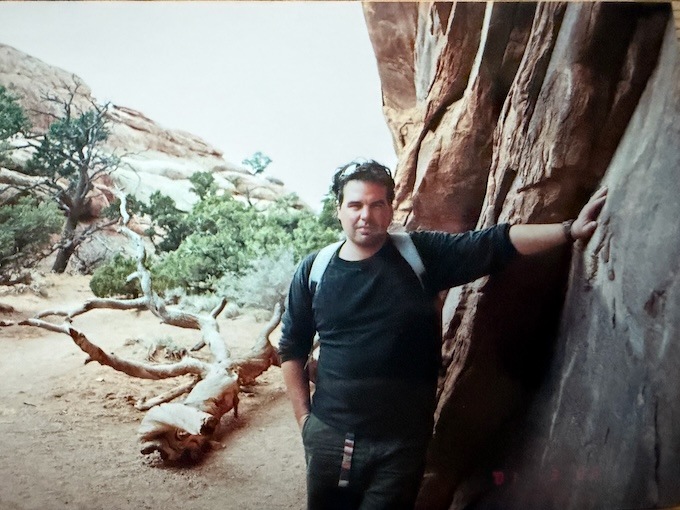
These were/are often bitter, lonely, and dangerous campaigns, especially for Native activists. Not long after moving to Oregon, I received a three-day tour of many of the most intense battle zones in the Four Corners region by the Navajo environmental and tribal activist Leroy Jackson, who took this photo of me outside of Kayenta in the shadow of Black Mesa. Leroy was a very intense person and he was fighting extremely powerful interests, like Peabody Coal, Duke City Lumber and corrupt members of the tribal government of the Big Rez.
I flipped through my journals of that week and was struck by a conversation we had about the relations between tribal activists and Gang Green and how unreliable the professional environmental groups are as coalition partners with Native people because of their unfailing tendency to compromise for political reasons on issues, such as sacred sites, where there can be no compromise. I jotted down that’d I’d relayed to Leroy one of my favorite admonitions from Dave Brower: “When we win, it’s merely a stay of execution. When they win, it’s forever.”
Leroy responded by saying, “For so many of you guys (white male activists), this is like a game. You’re here for a while, then back to school or onto some other issues. You can’t be counted on. But we live here. We have to play for keeps.” (I didn’t take offense at this, knowing firsthand the truth of what he was saying.) Leroy did play for keeps. A few months after our road trip, he was found dead in his car in northern New Mexico. The cops called it a suicide/drug overdose. But Leroy wasn’t a drug user. He wasn’t depressed or suicidal. He was almost certainly murdered. Yet, like so many killings of Native Americans, especially activists, the cops didn’t care enough to even investigate his death. They were glad he was dead.
The “Indian” wars have never ended.
COUNTERPUNCH
posted by Ricky at 19:41
linkar para este post



